
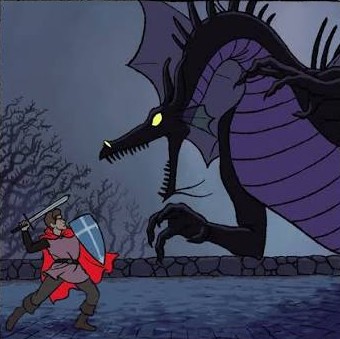
Acknowledgement to Joseph Campbell’s Pathways to Bliss, New World Library, 2004, and Walt Disney’s Sleeping Beauty, 1959, and Hercules, 1997.
I am revisiting Joseph Campbell’s Pathways to Bliss this morning as I sit on the porch drinking coffee. He has so many interesting and thought-provoking things to say, and I always come away from his books with a calm, content state of mind. Today, I have gathered new insights from passages I have read many times before. That is the benefit of reading closely. A person skilled with words–like Campbell undeniably was–creates multiple layers of meaning in everything he writes.
Campbell’s life’s work was the study of different mythologies and the similarities across all stories that apply to all humans. I love this. I love thinking that, though we have different traditions, there are certain truths that apply to all of us.
He says: “The myths tell you that if you engage in the world in a certain way, you are under the protection of Athena, under the protection of Artemis, under the protection of this, that, or the other god. That’s the model. We don’t have that today. [Life is changing so rapidly] we don’t have the stasis that is required for the formation of a mythic tradition…We’re all without dependable guides. “
As always, I took a personal lesson from this. A Christian by faith, for years I have felt guilty for not taking my boys to church, fearing that without that foundation I have left them adrift.
But they are fine young men: hardworking, honest, loyal, caring. Not perfect, but good. They became that without the influence of traditional religion in their lives. I have always believed they are that way in spite of my shortcomings in providing a path for them to follow.
Today I realized that I did provide them with a path. I did provide them with role models. I did give them a moral foundation, based not just in the teaching of the Bible, but in the very foundations of humanity, across all cultures and traditions.
I grounded them in modern mythology, in the stories that offer universal guidance for living, once you consider them beyond box office success or the culture of celebrity or theme park rides.
Consider this: my youngest son has chosen a career path in law enforcement. As a child, he was drawn to Hercules, the conqueror of monsters. He admired superheroes who protected civilization from forces of evil. Never a princess guy, he nonetheless watched Disney’s Sleeping Beauty to see Prince Philip slay the dragon. That is my son. He is spending his life slaying the “dragons” that threaten to hurt us, often vanquishing them without anyone knowing what he has accomplished. And he has chosen a wife who supports him completely, recognizing that the world needs protectors against the bad actors who are ever-present no matter what we do.
My older son fills the societal role of ‘sage,’ though he would balk to hear me call him so. He is drawn to the pursuit of wisdom, of perspective, of seeing truth through all the mundanities of living. His role models are the philosophers of history, who could well be considered mythological as some, like Socrates, cannot be verified as having actually lived. He admires them not only for their philosophies but for their occupation as thinkers, as people who take time to look around and see how things fit together. He is an ‘acquirer of knowledge,’ an occupation sorely needed but atrociously undervalued in our society. He has also chosen a wife who understands the value of his role and offers him different perspectives on the world.
My role is being a source of love and understanding. This also involves being a problem solver, taking people’s concerns seriously and helping them find a solution, as opposed to ‘I don’t know. That’s not my problem.’ My role models? My aunt, Margaret, and my husband’s aunt, Deena. They were both people who made you think you were the most important person in the world. When you left their presence, you felt better about yourself and better about the world. Are they mythological characters? They are now. They serve as my role models in the way I remember them, which is only part of who they really were. Their myths are the ones I have created around them, and those are the characters that I will pass on to my grandchildren, great-grandchildren, and beyond. We do create our own family mythologies, don’t we?
So my question to you is: Who are your role models?
Think about this deeply. Do not give a casual answer. Who do you know who has lived the way you want to live? Who is the model of the person you want to be?


